

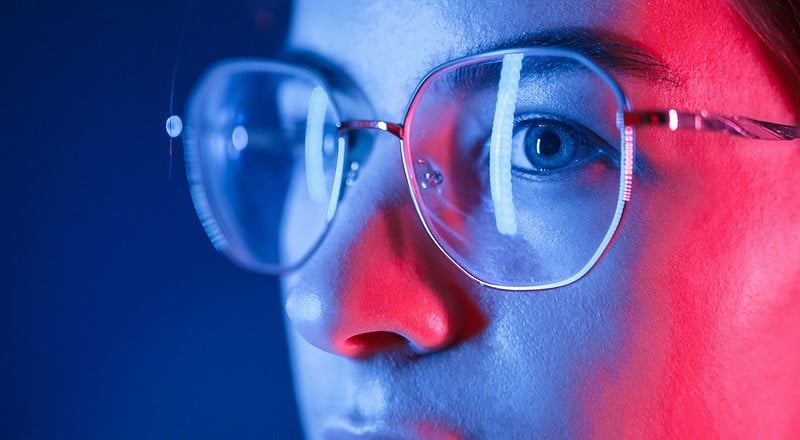
In today’s digital era, we dedicate a significant amount of time to looking at screens.—whether it’s a computer, smartphone, or tablet. With this increased screen time, concerns about blue light exposure and its impact on eye health have surged. Blue light glasses are promoted as a remedy for alleviating eye strain and shielding against the adverse effects of blue light. But do these glasses really work? Let’s dive into the science behind them.
What is Blue Light
Blue light is associated with the visible light spectrum and is defined by its short wavelength and high energy. While sunlight is a primary contributor to blue light, it is also released by digital screens, leading to concerns regarding the impact of prolonged exposure. Here’s what you need to know about it:
Natural vs. Artificial Blue Light
- Natural blue light from the sun performs a vital role in managing our sleep-wake cycles (circadian rhythm) and boosting alertness.
- Man-made blue light from screens and LED lighting has become a growing concern, especially with prolonged exposure, as it has been linked to digital eye strain.
How Blue Light Affects Our Eyes
Too much exposure to blue light, especially from digital devices, can cause several issues:
Digital Eye Strain
Digital eye strain, also identified as computer vision syndrome, is marked by symptoms such as dry eyes, headaches, blurred vision, and difficulty focusing after extended screen use. Blue light from screens is believed to contribute to these symptoms by scattering more quickly than other light, leading to glare and discomfort.
Disrupted Sleep Patterns
Exposure to blue light, particularly in the evening, can interrupt sleep patterns by interfering with the production of melatonin, the hormone that manages sleep. This is why using devices late at night can make it harder to fall asleep.
Potential Long-Term Effects
Some studies suggest that extended exposure to blue light could damage retinal cells, leading to an increased risk of age-related macular degeneration (AMD) over time. While more research is needed to confirm this, it’s a growing concern.
How Do Blue Light Glasses Work?
Blue light glasses are designed to exclude or block a portion of blue light released by screens. By reducing the amount of blue light that reaches your eyes, these glasses aim to:
- Reduce digital eye strain and fatigue
- Help improve focus and comfort during long hours of screen use
- Potentially enhance sleep quality by minimizing blue light exposure in the evening
Do Blue Light Glasses Really Work?
The performance of blue light glasses is a subject of ongoing debate. While many users report reduced eye strain and improved comfort when using them, scientific studies offer mixed results.
Supportive Evidence
- Blue light glasses can assist in alleviating symptoms of digital eye strain by decreasing glare and improving contrast.
- A few studies have shown that wearing blue light glasses in the evening can help decrease the harmful consequences of blue light on sleep patterns by limiting exposure to blue light.
Criticisms and Mixed Findings
- However, some experts argue that digital eye strain may be caused more by how we use screens (e.g., poor posture and lack of breaks) than by blue light itself.
- Critics also point out that there isn’t enough conclusive evidence to prove that blue light glasses protect against long-term damage, such as AMD.
Alternative Ways to Protect Your Eyes
Whether or not you choose to invest in blue light glasses, there are several ways you can decrease digital eye strain and protect your eyes:
20-20-20 Rule
To reduce eye strain, pause for twenty seconds every twenty minutes to gaze at an object twenty feet away. This will allow your eyes to relax from prolonged screen use.
Adjust Screen Settings
Many devices now offer blue light reduction modes, such as “Night Shift” on iPhones or “Night Light” on Windows, which can reduce blue light exposure during evening hours.
Optimize Lighting and Posture
Proper lighting in your workspace, adjusting your screen brightness, and maintaining a healthy posture can help reduce eye strain.
Conclusion
While blue light glasses may provide relief for some users, particularly in reducing digital eye strain and helping with sleep, they aren’t a one-size-fits-all solution. The science behind them is still evolving, and their long-term benefits remain unclear. However, those who spend hours in front of screens daily might be worth considering as part of a more comprehensive approach to preserving eye health and comfort.